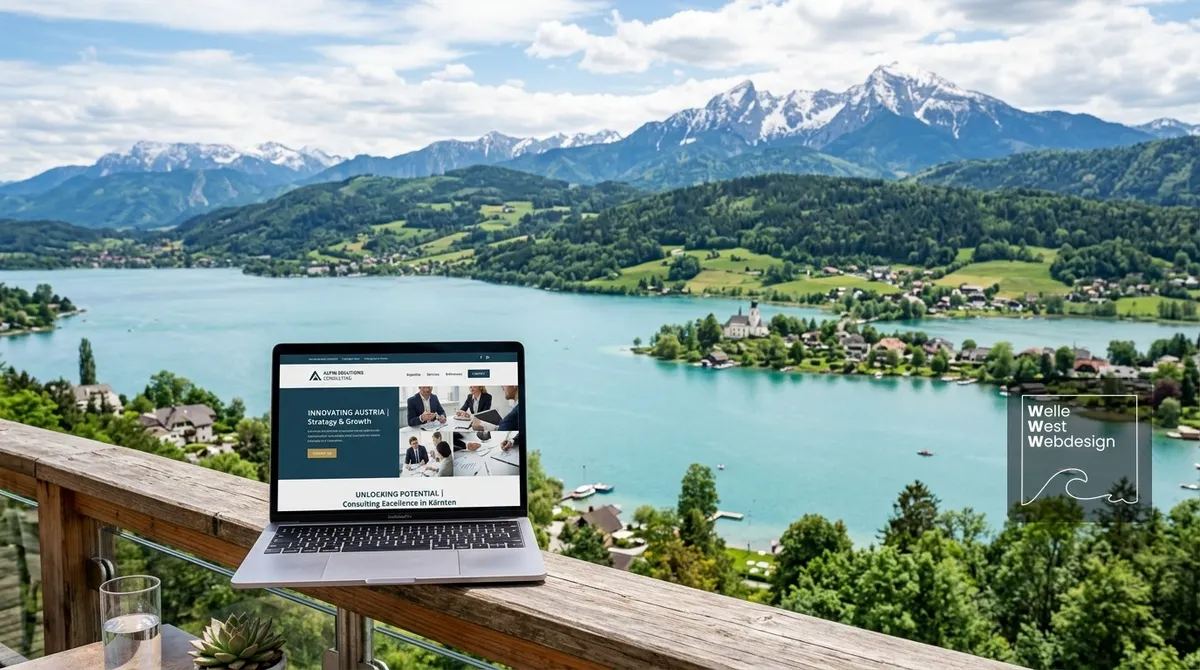
Why Your Website Is Not Bringing Customers – and How to Change That
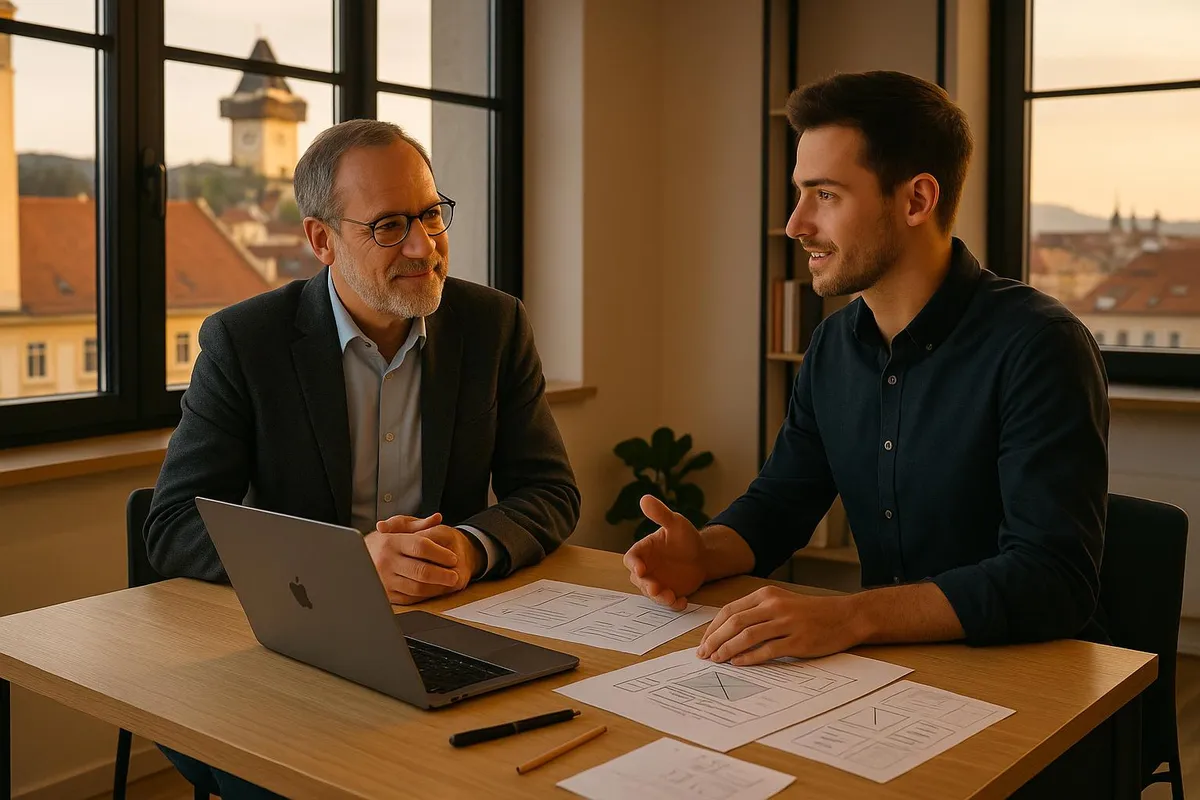
Your website is not attracting customers? This is often due to problems such as outdated design, poor mobile user experience, or unclear messaging. Many businesses in Austria struggle with these challenges, but the solution is simpler than you might think. With targeted adjustments, you can transform your website into an effective tool for customer acquisition. Here is what really helps:
- Modern design and mobile optimisation: Your site must work just as well on smartphones as on desktop. Fast loading times, clear navigation, and an appealing layout build trust.
- Clear messaging: Avoid cluttered content. Show clearly what you offer and use calls-to-action such as "Book an appointment now".
- Local search engine optimisation: Use regional keywords like "your service + Vienna", and maintain your Google My Business listing.
- User-friendliness: Intuitive navigation, easily accessible contact details, and short forms make the difference.
With these measures, you not only increase visibility but also win the trust of your customers. Need support? Welle West Webdesign offers solutions from EUR 599 – specifically for SMEs in Austria. Get advice and turn your website into a customer magnet!
Common Problems That Prevent Websites from Winning Customers
Many websites fail not because of a single error but due to a combination of various weaknesses. These problems often creep in over time and are only noticed when the hoped-for results fail to materialise. An analysis shows that four main areas prove particularly problematic for Austrian SME websites.
Outdated Design and Poor Mobile Usability
A large proportion of website visits in Austria today occur via smartphones or tablets. Yet many business websites are not optimised for mobile devices. Texts are often too small, buttons difficult to use, and navigation only works smoothly on desktop.
An outdated design also conveys the impression that the products or services are no longer up to date. Particularly in industries such as trades or consulting that rely heavily on trust, this can quickly deter potential customers.
Slow loading times exacerbate the problem further. Many visitors leave the site before they can even perceive the content. Alongside the visual appearance, unclear information also contributes significantly to the absence of customers.
Unclear Messaging and Confusing Offerings
Austrian businesses often try to explain too much on their website. The result is cluttered homepages without clear calls-to-action. Important trust signals such as customer reviews or references are also frequently missing. Visitors consequently do not know which services are precisely offered, what benefit they provide, or what the next step should be.
Particularly with more expensive services or in the B2B sector, trust is a decisive factor. Without trust-building elements, the website quickly appears impersonal and unconvincing.
Weaknesses in Search Engine Optimisation
Even the best website achieves little if it cannot be found on Google and other search engines. Many Austrian businesses neglect local search engine optimisation. Important regional keywords are often missing from key areas of the website.
Technical SEO problems are also widespread: missing meta descriptions, duplicate content, or unclear page structures make it difficult for search engines to properly classify the website. As a result, competitors appear higher in search results.
Another weak point is the Google My Business listing. Incomplete profiles, outdated opening hours, or missing reviews cause potential customers to switch to the competition. Even when the technical foundation is solid, complicated navigation often causes visitors to leave the website in frustration.
Difficult Operation and Complicated Navigation
Complex navigation is one of the most common reasons why visitors quickly leave a website. When the information they are looking for is not quickly accessible, many prospects turn to alternatives. Nested menus, unclear categories, and hard-to-find contact details lead to frustration.
Small font sizes, unfavourable colour combinations, or cluttered layouts also hinder usability. Older users in particular, who represent an important target group in many B2B areas, are deterred by such barriers.
Furthermore, a lack of accessibility directly excludes a portion of potential visitors. Websites that are not compatible with screen readers or do not offer sufficient contrast not only violate legal requirements but also miss the opportunity to reach a wider audience.
All these weaknesses can be addressed through targeted measures – as explained in more detail in the next section.
Solutions for Austrian Small and Medium-Sized Businesses
Many challenges can be effectively resolved through targeted measures and a structured approach. Here are concrete steps to help eliminate weaknesses and strengthen your online presence.
Website Updates and Speed Improvements
The first step towards more success begins with a modern, user-friendly website. The design should be not only appealing but also function flawlessly on all devices – from smartphone to desktop. Particularly in classic sectors such as trades or consulting, a professional appearance is crucial for building trust.
Loading time plays a central role here. Even small delays can cause visitors to leave the site. Platforms like Wix offer optimised loading times and automatic image compression, which significantly improves performance. Additionally, unnecessary plugins should be removed and server performance regularly checked.
Another important point is accessibility. Websites should offer sufficient colour contrasts and be compatible with screen readers to provide all users with a positive experience.
Content That Appeals to Austrian Customers
Texts on the website should be clear, understandable, and tailored to customer needs. Technical jargon is often off-putting – instead, the benefit to the customer should be in the foreground. What does the product or service specifically provide? This question should be clearly answered.
Austrian customers place great value on local references and personal contacts. It is therefore important to prominently display contact details, locations, and regional experience. Transparent pricing – formatted according to Austrian standards (e.g. EUR 1,500.00) – also builds trust.
Clear calls-to-action such as "Book an appointment now" or "Request a quote" guide visitors directly to the next step and increase the likelihood that they will take action.
Better Results in Local Search Engines
For Austrian businesses, local search engine optimisation (SEO) is particularly important. Incorporating regional keywords like "Vienna", "Graz", or "Tyrol" in headings and texts significantly improves visibility on Google.at. The keywords should appear natural and not be forced.
A complete Google My Business listing is indispensable. Opening hours, address, phone number, and the link to the website should always be kept up to date. Positive customer reviews also have a positive effect on ranking – and these should be actively solicited.
Technical SEO aspects such as meta descriptions, structured data, and a clear URL structure additionally contribute to better discoverability. Particularly important: the optimisation should be tailored to the search habits of Austrian users.
User-Friendliness as the Key to Success
A user-friendly website is crucial for convincing visitors. Navigation should be intuitive and clearly structured. A clear main menu with few, concise items helps users quickly find the information they want. Contact details and opening hours should be easily accessible in the header or footer of every page.
Contact forms should be kept as short and simple as possible. Too many required fields deter prospects. For smartphone users, a direct phone link is particularly practical, while a clearly visible email address facilitates contact.
Last but not least, GDPR compliance is a must for Austrian businesses. A legally secure privacy policy, a legal notice, and a user-friendly cookie banner are mandatory – without impairing the user experience.
With these measures, the number of enquiries can be sustainably increased and the online presence effectively strengthened.
How Welle West Webdesign Solves These Problems
Welle West Webdesign has analysed the most common weaknesses and shows how sustainable results can be achieved with targeted measures.
In Austria, businesses know: a professional website is a decisive success factor. Welle West Webdesign develops websites specifically tailored to the needs of Austrian businesses. Not only appealing design but also performance play a central role.
Fast Websites with Wix
Choosing the right platform is crucial for a website's success. This is where Welle West Webdesign relies on Wix, a platform that impresses with its high performance. Particularly for Austrian SMEs that want to focus on their core business, this is a major advantage.
Another highlight of Wix is its SEO-friendly structure. The platform generates clean code, supports structured data, and enables straightforward optimisation for Google.at. This allows websites to achieve better rankings in local search results – entirely without complicated technical interventions.
Clear Pricing from EUR 599
Transparency in costs is essential. That is why Welle West Webdesign offers a clearly calculable solution from EUR 599 with no hidden fees.
PackagePriceIdeal for****Delivery timeOne-pagerfrom EUR 599Small businesses, freelancersapprox. 10 daysStandard Websitefrom EUR 1,900Established businessesapprox. 10 daysExtended Websitefrom EUR 2,700Growing businessesapprox. 10 daysE-Commerce Websitefrom EUR 4,200Online retailersapprox. 10 days
All packages include basic SEO optimisation, mobile adaptation, and a detailed editing guide. Additional pages can be added as needed for EUR 100 per page – ideal for flexibly expanding the website.
Local Support and Ongoing Care
Personal contact with an Austrian representative makes the difference. Welle West Webdesign was founded by Nicolas Fabjan and Patrick Katholnig and offers direct support in German. The team knows the specific requirements of the Austrian market precisely.
Ongoing care includes regular updates, security checks, and content adjustments on request. This ensures businesses can be confident that their website is always up to date while they focus on their business.
A special bonus is the online training for self-editing, which is included in the extended packages. This enables businesses to make minor changes themselves while more complex tasks continue to be professionally managed. This combination of independence and support has proven extremely efficient in practice.
Performance Measurement and Continuous Improvement
After implementing optimisation measures, it is crucial to regularly review the results. A website is never "finished" – it requires constant adjustments and improvements. For Austrian businesses that want to be successful long-term, it is essential to continuously monitor their website's performance. This ensures that your investment actually brings customers. Below, you will learn how to capture the most important metrics and optimise them in a targeted manner.
Monitoring Key Performance Indicators
For Austrian SMEs, metrics such as visitor numbers, time on site, and conversion rate play a central role. With tools like Google Analytics, you can track free of charge how many visitors your website has, where they come from, and how they navigate your site. Particularly interesting is the proportion of visitors from Austria and performance in local search queries.
A decisive factor is conversion measurement. This captures how many visitors actually become customers – whether through contact enquiries, calls, or online purchases. The conversion rate varies by industry and objective but provides clear indications of which measures are working. This data helps you systematically address weaknesses and further optimise your website.
Your website's loading speed is also an important point. Tools like Google PageSpeed Insights enable you to detect technical weaknesses early. Fast loading times are particularly essential for Austrian users, as longer wait times often lead to higher bounce rates. A smooth user experience also has a positive impact on search engine ranking.
Continuous Updates and Optimisations
In addition to analysing metrics, it is important to regularly update and maintain the website. New content should be added at fixed intervals. Search engines rate actively maintained websites more favourably, which in turn can improve your ranking. Check how updates affect visitor numbers and conversions, and keep opening hours, prices, and offers always up to date – for local businesses in Austria, this is a decisive factor.
Technical maintenance must also not be neglected. Security updates, regular backups, and checking all functions are essential to fix broken links or non-functioning contact forms in time. Such problems could otherwise deter potential customers.
Another important point is continuous SEO optimisation. Regularly analyse which search terms your website is found for and adjust your content accordingly. Local keywords like "your service + Vienna" or "your service + Salzburg" should always be monitored to remain clearly visible in regional search results. These ongoing adjustments are a central component of your strategy and contribute significantly to the continuous improvement of your website.
FAQs
How do I find out whether my website is mobile-friendly?
To ensure your website works flawlessly on mobile devices, there are a few simple ways to check this. Open your page on a smartphone or tablet and check whether the content is easily readable and the site is simple to navigate. Alternatively, you can shrink your browser window on the computer to see how the layout adapts to different screen sizes.
Additionally, special analysis tools are available. These help evaluate the user-friendliness of your website on mobile devices. They check technical aspects such as loading times and design adaptation. A mobile-friendly website is crucial for winning new customers and retaining existing ones long-term.
How can I improve my website's loading speed?
Your website's loading speed plays a decisive role in the user experience and the success of your site. With a few targeted measures, you can significantly boost performance:
- Optimise images: Reduce the file size of your images through compression without noticeably losing quality. Tools or plugins can help with this.
- Use caching: Activate browser caching so that returning visitors can load content faster. Supplement this with server-side caching to further reduce loading times.
- Streamline code: Remove unnecessary spaces, comments, and redundant code in your CSS and JavaScript files. This saves data volume and speeds up page rendering.
- Use a Content Delivery Network (CDN): Distribute your static content such as images or scripts across servers that are geographically closer to your users. This significantly reduces loading times.
With these optimisations, you can improve your website's speed while simultaneously increasing visitor satisfaction.