
Case study - live since July 2026
Strandhotel Faak:
direct bookings instead of portal commission.
A family hotel right on the southern shore of Lake Faak. Every booking via a portal cost the hotel around 18 % commission. The hotel decided to let its guests book directly - here is how it achieved that.
One message is enough - you get an honest assessment of your website. Free, even if you never become a client.
Measured with Google PageSpeed - Google's own website test with scores from 0 to 100, where 90 and above is top class. July 2026 - feel free to check for yourself.
The hotel reported 3 direct bookings in the first hour after go-live. We will add further numbers as soon as the hotel approves them - this page can be measured by its numbers.
The starting point
Turning name searchers into direct bookers.
Guests discover a hotel on Booking & co. - and then google its name. Whether that moment becomes a direct booking or yet another portal commission is decided by the hotel's own website: it has to load instantly, convince instantly and make the path to booking as short as possible.
That is exactly the moment the Strandhotel Faak wanted to win - we built the website for it: the direct-booking advantage is visible from the first second, the booking bar is always one glance away, and international guests find everything in their own language. You can see how that works below - station by station, with real excerpts from the live site.
Before / After
See for yourself - drag the slider.
On the left the old site (archived on 6 July 2026), on the right the new one. Same domain, same hotel.
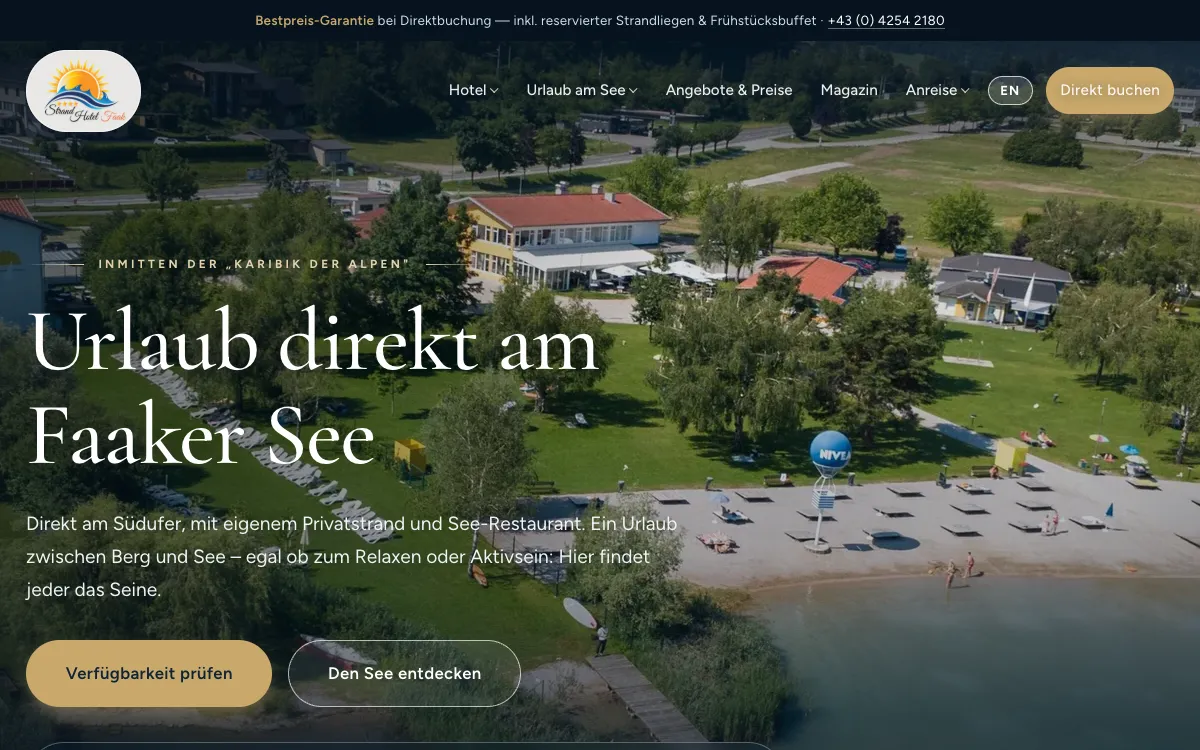
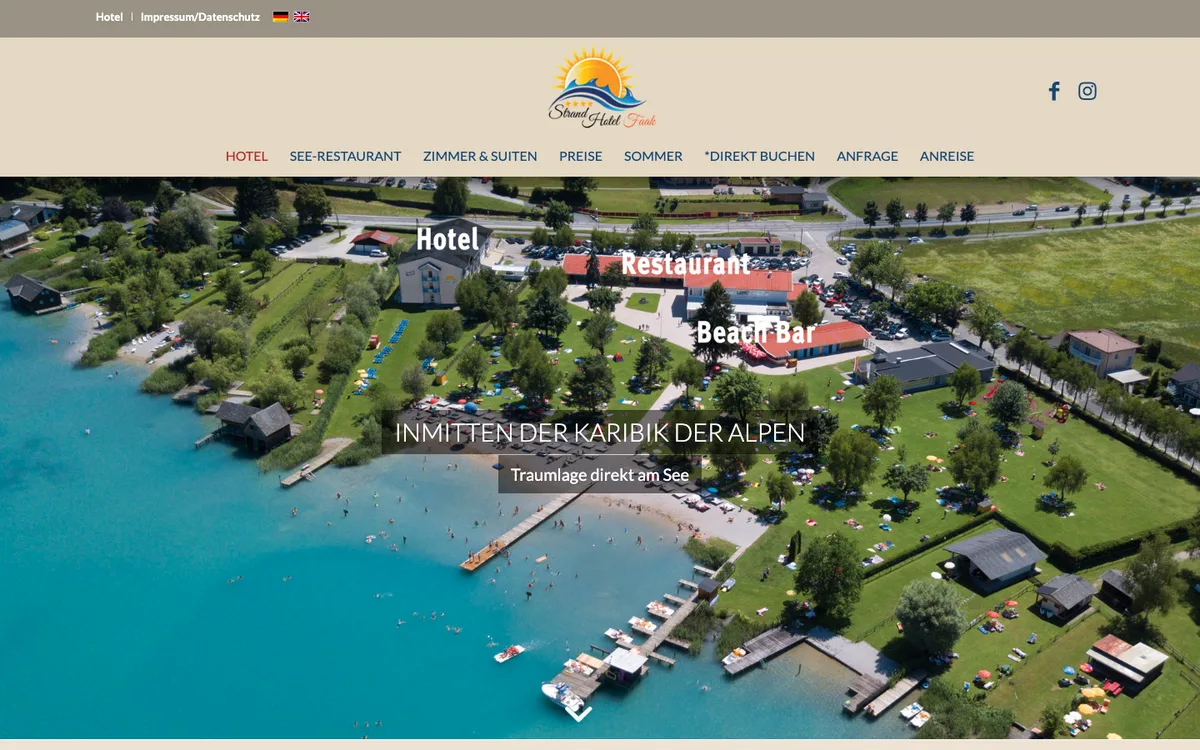
Before values measured and archived on 6 July 2026, after values measured in July 2026 (Google PageSpeed + our own measurement) - feel free to measure for yourself.
The guest journey
Follow one guest - from portal to direct booking.
Six stations, real excerpts from the live site. This is how the website works for the hotel.
1The discovery
A guest discovers the hotel on a portal.
A holiday on Lake Faak - the guest compares hotels on Booking & co. and settles on the Strandhotel Faak. For visibility, the portals are great. The catch: if the booking happens there, the hotel pays around 18 % commission for it.
Up to this point, the portals work for themselves. From here on, the hotel's own website can take over.
2The name search
They google the hotel name.
Before booking, most guests google the name - looking at photos, checking reviews, comparing prices. This moment is the hotel's one chance to bring the booking home, past the portal.
Every hotel already has these name searchers today. The only question is whether it loses them back to the portal.
3The landing
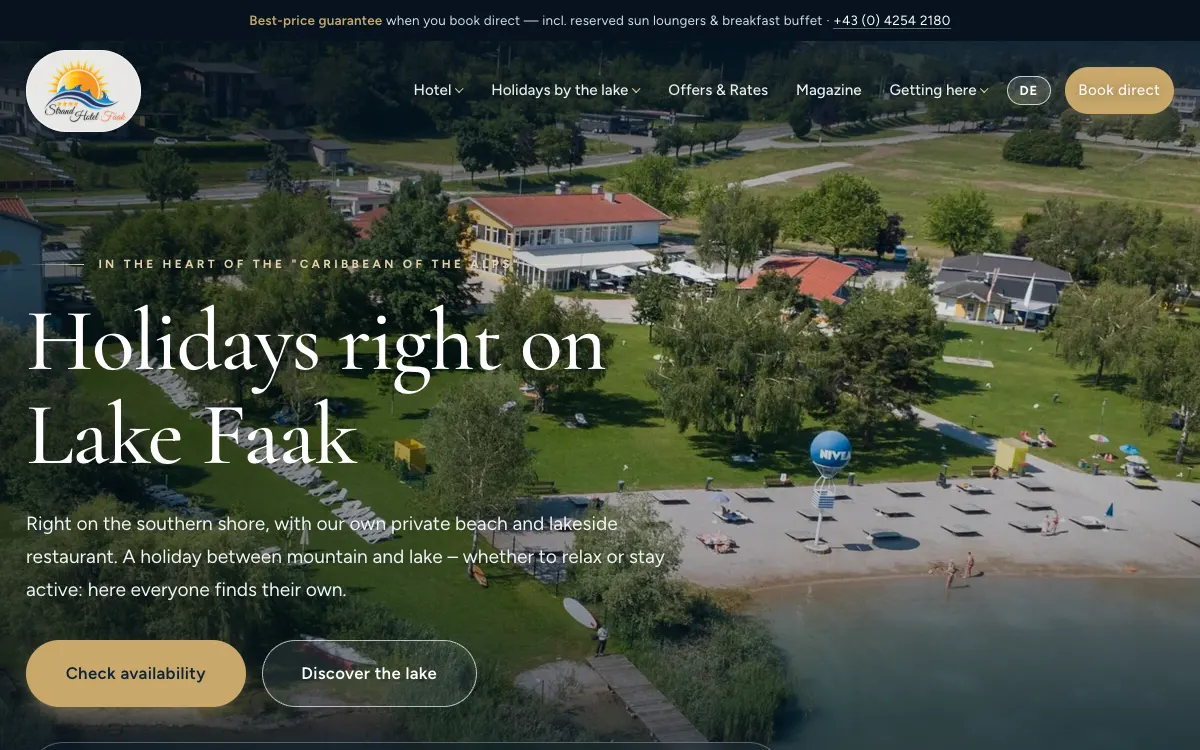
They land on strandhotelfaak.com - and the page is simply there.
No loading bar, no reflowing: on desktop the page is fully loaded in 0.7 seconds - Google PageSpeed 100 out of 100. Behind it, the guest finds everything they would otherwise look for on the portal: rooms, offers, rates and a magazine full of trip ideas.
If the hotel's own site is slow, the guest swipes back to Google - and books on the portal.

4The reason to stay
They instantly see why booking direct is better.
Best-price guarantee when you book direct, reserved sun loungers, breakfast buffet - that sits in the top line of every single page. The guest never has to hunt for the direct-booking advantage. It is there before they even scroll.
Without a visible reason, guests book where they were first - on the portal.

5The short path
They check availability - three fields, one click.
Arrival, departure, guests - the booking bar sits right in the first screen, not behind a menu item. No searching, no "where do I actually book here?".
Every extra click on the way to a booking costs guests. Here there is exactly one.
6The direct booking
They book direct - the commission stays in the house.
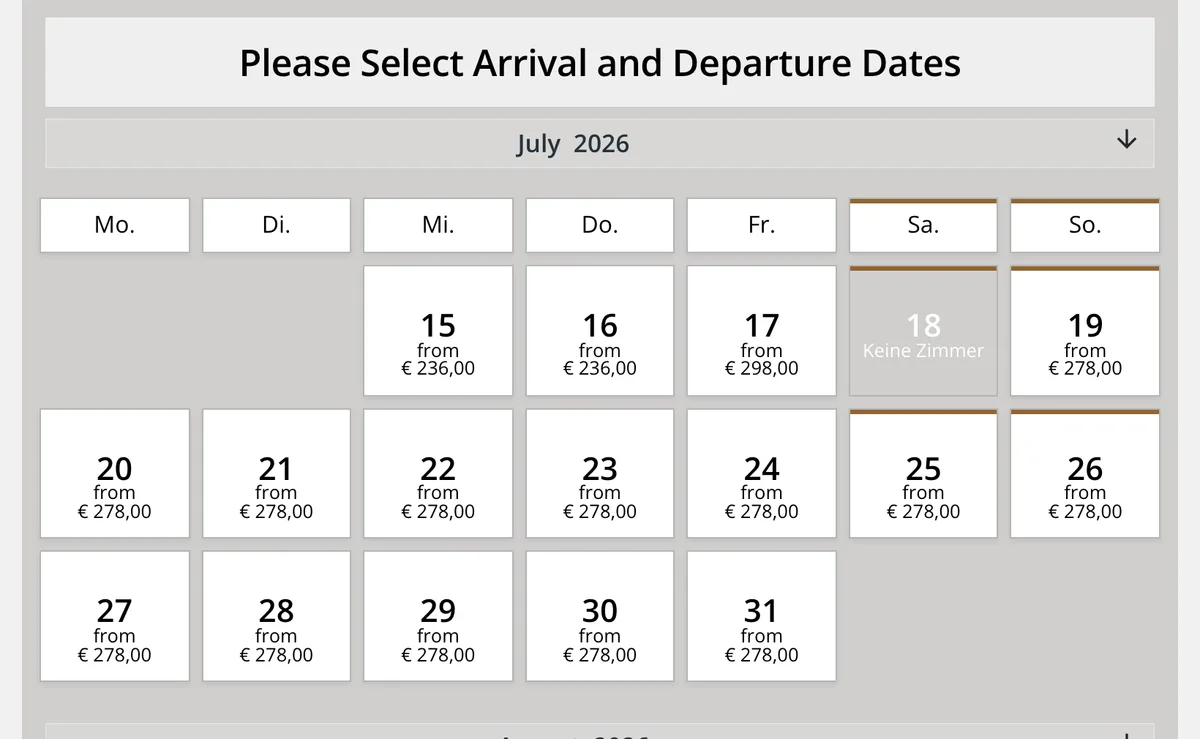
The hotel's booking engine is embedded directly into the website: real availability, real rates, a booking in a few steps. No detour via a portal - and no commission.
3 direct bookings within the first hour after going live - reported by the hotel.

And the journey is accessible too: 99 out of 100 in the accessibility audit - easy to read, easy to use, ready for the legal requirements for hotels with online booking.
What this is really about
What is at stake for every hotel.
A hotel getting 1,000 nights a year at €150 through portals pays roughly €27,000 in commission (18 % of €150,000). Every booking that comes directly through its own website keeps that margin in the house - a sample calculation, not a forecast. That is the amount at stake with every hotel website.
Calculate it yourself: what does Booking cost you? → (in German)
Honest division of labour: This website captures the demand the hotel currently loses to portals - guests who discover it on Booking and then google its name, recommendations, returning guests. What it does not do: create new demand. For that - campaigns, metasearch, systematic portal reduction - we work with our partner agency Nordsteg.
I want this for my hotel too.
10 minutes is enough - on the phone or in a WhatsApp chat you will know what your website is leaving on the table.