
Case study - live since September 2026
Strandhotel Burgstaller:
31 seconds became 3.
A small, family-run house with 24 rooms right on Lake Brennsee in Carinthia. On a mobile connection, the old website took more than half a minute to finish loading - and then showed everyone the same thing. Here is what we made of it.
One message is enough - you get an honest assessment of your website. Free of charge, even if you never become a client.
Measured with Google PageSpeed - Google's own website test, scored from 0 to 100, with 90 and above counting as top class. The mobile loading time we measured ourselves, on a throttled connection, exactly as we did for the old site. As of 12 September 2026 - feel free to measure for yourself.
What is still missing here are booking figures. The site went live in September - we will add result figures as soon as they are meaningful and the hotel releases them.
The starting point
Two kinds of guest nobody searches for together.
The Strandhotel Burgstaller lives on two kinds of guest: people who travel with a dog and are looking for a house where the dog really is welcome everywhere - and couples who cycle, hike or paddle during the day and want their peace in the evening. Neither of them searches for the hotel's name. They search for what they need.
The old site could not win that moment. Three reasons, measured on 4 August 2026:
was how long the home page took to finish loading on a mobile connection. The main image only appeared after 22.4 seconds.
was the weight of the home page, spread over 92 server requests. The main reason was a wall of dozens of gallery thumbnails.
pages had a preview image for sharing. Anyone forwarding the page on WhatsApp sent a bare link.
The new site does two things differently. It is fast enough that nobody drops out - and it sorts guests into their two paths right at the start. What that looks like you can see below, station by station, with real excerpts from the live site.
Before / after
See for yourself - drag the slider.
On the left the old site (archived on 4 August 2026), on the right the new one. Same domain, same house, same aerial photo.
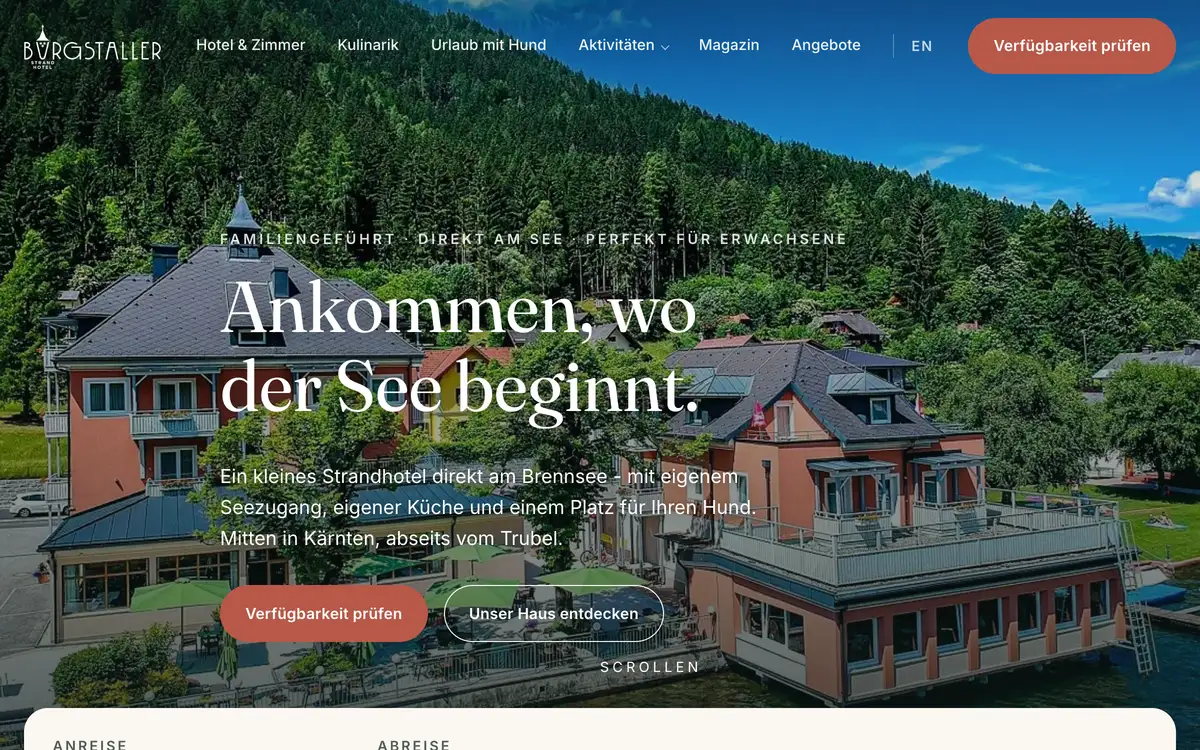
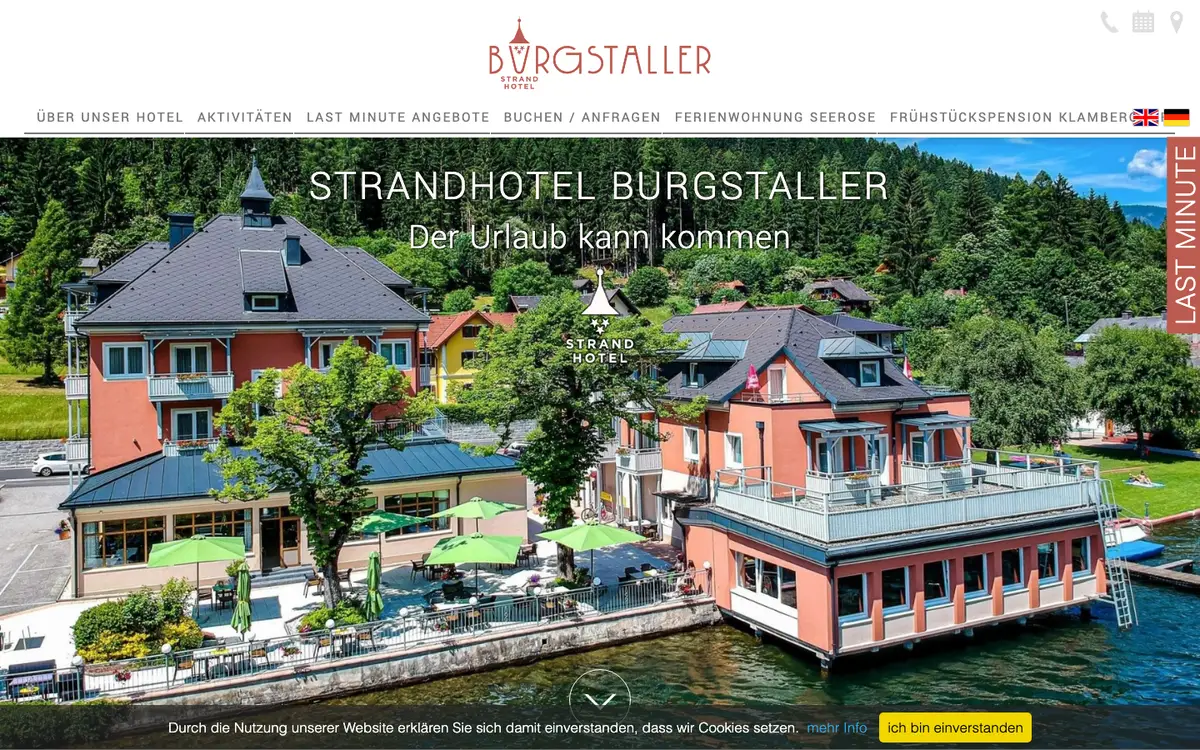
Before figures measured and archived on 4 August 2026, after figures on 12 September 2026. PageSpeed and accessibility from Google, loading time and page weight measured by us - both times on the same throttled connection.
The guest journey
Follow one guest - from the search to the enquiry.
Six stations, real excerpts from the live site. This is how the website works for the house.
1The search
The guest is not looking for a hotel. They are looking for a solution.
"Dog friendly hotel", "adults-only holiday", "cycling holiday Nockberge" - that is how it starts. Anyone who already knows the hotel's name is close to booking anyway. The business lies with the others: people who have a problem and are looking for a house that solves it.
A site that only serves the hotel's name is invisible to these guests.
2The landing
They tap the result - and the page is there instantly.
On the move, on a train, with two bars of signal: that is exactly how a hotel website gets read. The old site took more than half a minute to get there. The new one finishes loading after 3.6 seconds, and after half a second on desktop. Instead of 5.3 MB, 0.7 MB goes over the line; instead of 92 server requests there are 15.
Someone who has to wait 30 seconds does not wait. They go back to Google - and land at the next house.
3The fork
The site sorts them, instead of making them search.
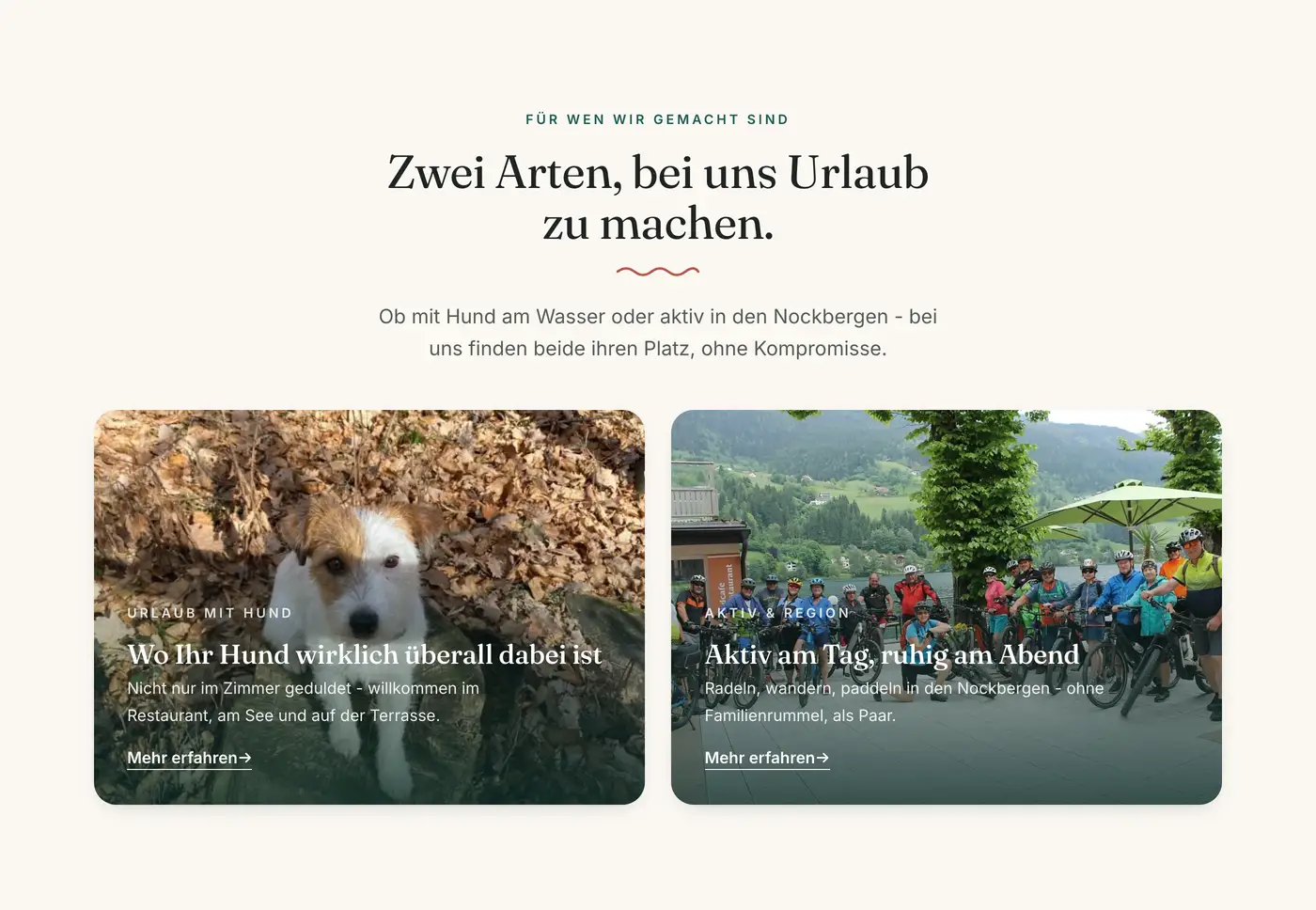
Two cards, two paths: "Holidays with a dog" and "Active & region". Behind them sit two separate content tracks, each with a detailed page and several guides in the magazine - from swimming with a dog in Lake Brennsee to the cycling routes around Feld am See.
The old site showed everyone the same thing: a wall of thumbnails. People who do not recognise themselves do not stay.
4The shortcut
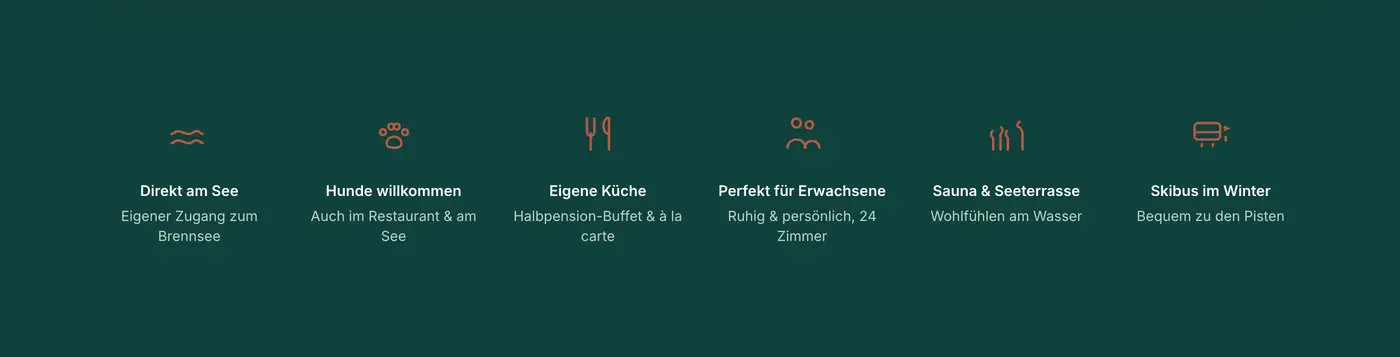
Six questions, answered before they are asked.
Right on the lake. Dogs welcome, in the restaurant too. Its own kitchen. Quiet and personal, 24 rooms. Sauna and lakeside terrace. Ski bus in winter. Six lines, one screen height - that is the entire basis for a decision a guest would otherwise click through five subpages to assemble.
Every question left open is a reason to look somewhere else after all.
5The one question
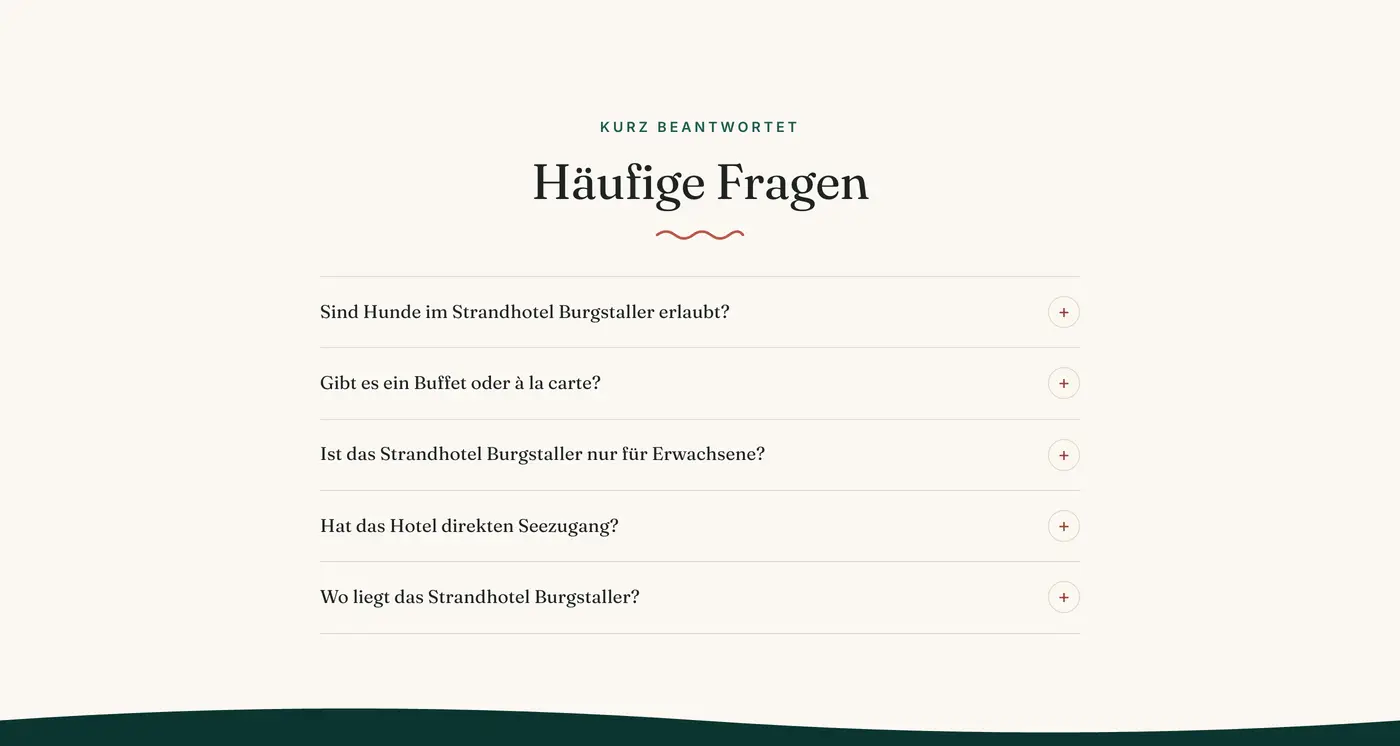
"Can the dog really come everywhere?"
At a dog-friendly house, this one question decides the booking - and "dogs allowed" is not an answer, because everyone says it and it is rarely true. That is why the question comes first in the FAQ, with a concrete answer. The same text is marked up for Google as FAQ data, so it can already appear in the search results.
Unanswered questions do not get asked. They turn into a booking somewhere else.

6The short path
They enquire - three fields, one click.
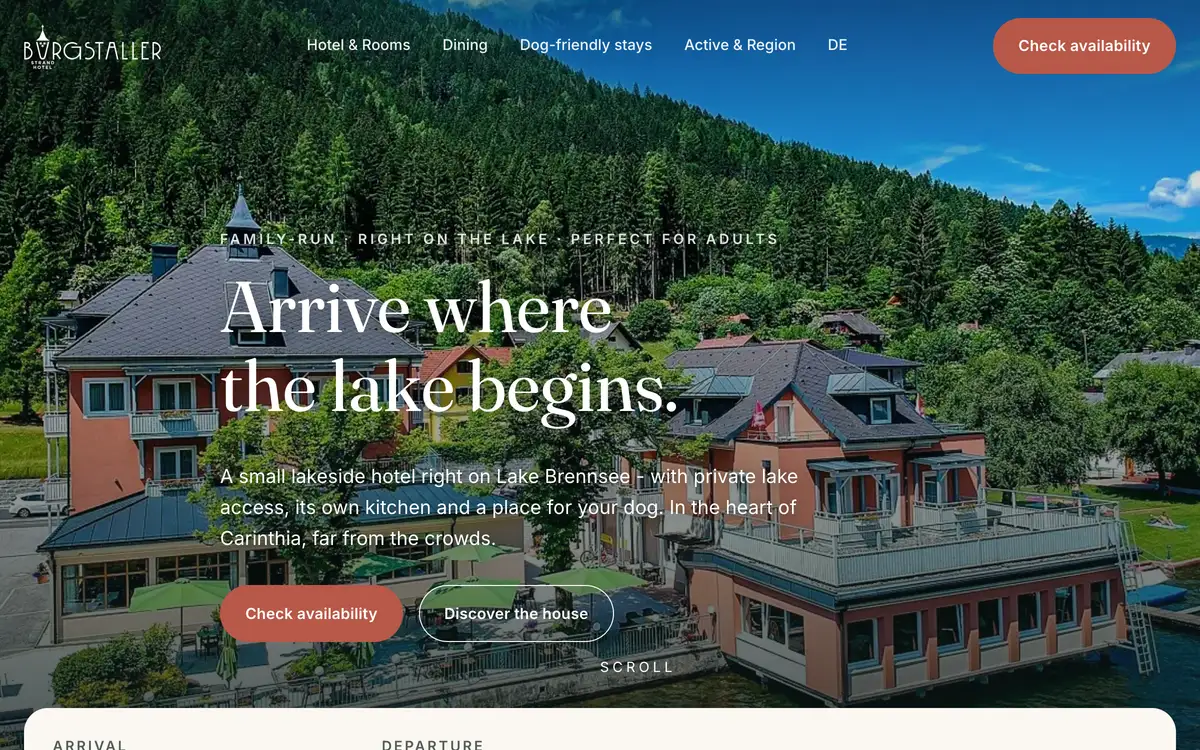
Arrival, departure, guests. The bar sits directly below the first image, not behind a menu item, and the guest selector includes "2 adults + dog". Plus a second route for anyone who prefers writing: WhatsApp, because the hosts are usually with their guests and answer faster there than on the phone.
Every enquiry that arrives here instead of at a portal saves the house roughly 15 to 18 % commission.

And the journey is accessible, too: 99 out of 100 instead of 73 before - easy to read, easy to operate, ready for the legal requirements that apply to hotels with online booking.
What this is really about
What is at stake at every hotel.
A hotel that gets 1,000 room nights a year at 150 € through portals pays roughly 18,000 to 27,000 € in commission for them (12 to 18 % of 150,000 €). Every booking that comes directly through its own website instead keeps that margin in the house - an example calculation, not a forecast. This is exactly the amount at stake with every hotel website.
An honest division of labour: this website captures the demand the house currently loses to portals - guests who discover it on Booking and then google the name, referrals, returning guests. On top of that come the two content tracks that make it findable for "dog friendly hotel" and "active holiday" in the first place. What it does not do: buy new demand. For that - campaigns, metasearch, systematic portal reduction - we work with our partner agency Nordsteg.
I want this for my hotel too.
10 minutes are enough - on the phone or in a WhatsApp chat you will know what your website is leaving on the table.